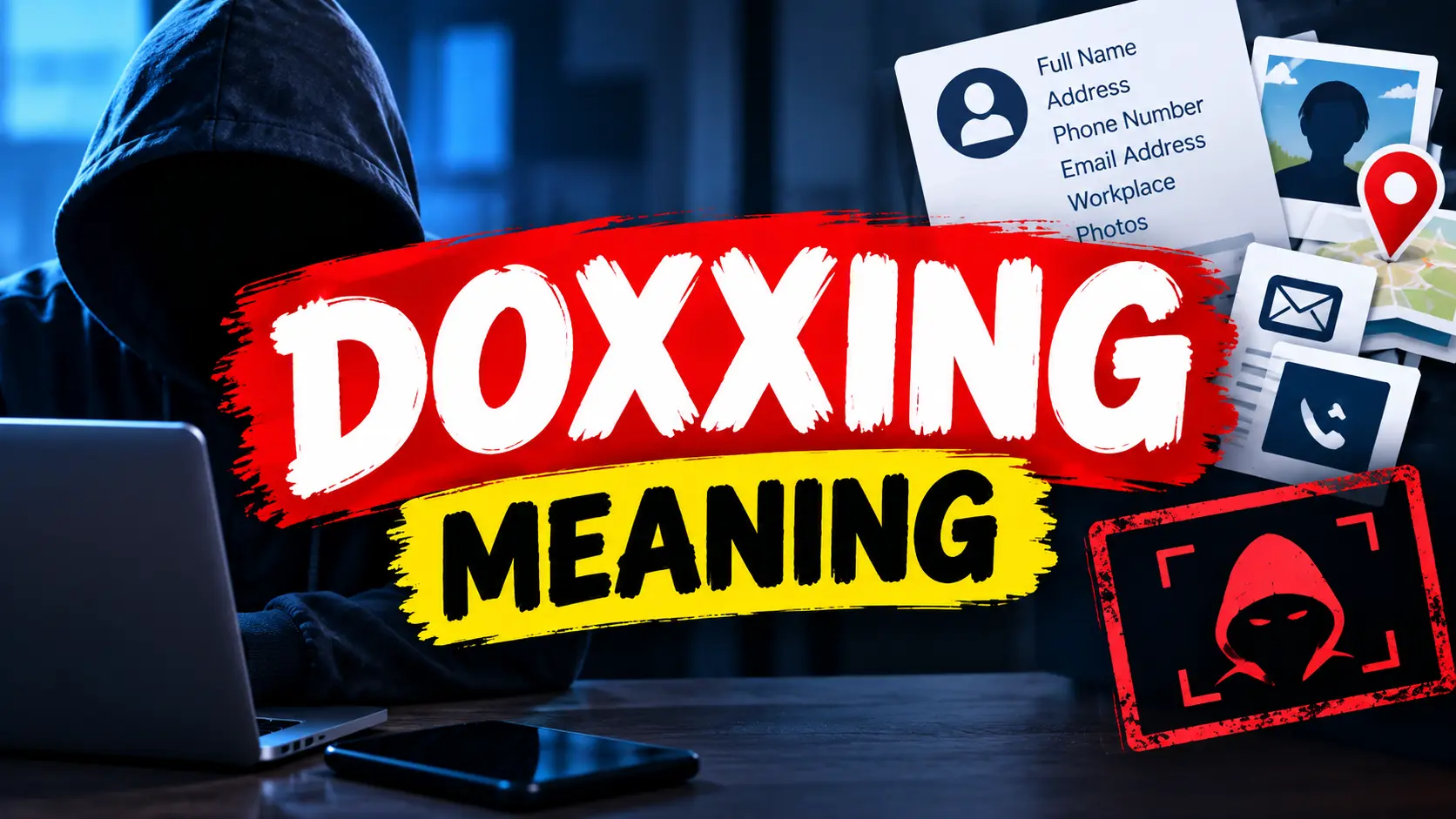
The doxxing meaning is straightforward: it’s when someone digs up your private information — your real name, home address, phone number, workplace, or family details — and posts it publicly online without your permission, usually to scare, humiliate, or put you in danger. It happens on Twitter/X threads, Discord servers, TikTok comment sections, and even in group chats between people who think it’s a joke.
This guide breaks down exactly what doxxing means, how it happens, what it looks like on different platforms, whether it’s illegal, and — most importantly — how to protect yourself if you’re ever targeted. No fluff, just what you actually need to know.
Table of Contents
Doxxing Meaning: The Simple Definition
At its core, the doxxing meaning refers to the act of researching and publicly releasing private or identifying information about a person, usually without their consent and usually with harmful intent.
The word comes from “dropping docs” — short for documents — a term that started in hacker forums in the 1990s. Back then, revealing someone’s real identity in an anonymous online argument was called “dropping dox.” Over the decades, “dox” turned into “doxx” and eventually became a verb: to dox someone, or to be doxxed.
What separates doxxing from a normal social media search is intent and exposure. Looking someone up out of curiosity is common and mostly harmless. Doxxing crosses a line because the information is compiled, packaged, and shared publicly — often alongside a call to harass, threaten, or “deal with” the target.
Information that typically gets exposed in a doxxing incident includes:
- Full legal name
- Home address
- Phone number
- Workplace or school
- Family members’ names
- Financial details
- Private photos
- Social media accounts under a different identity (like a burial or private account)
Where the Word “Dox” Came From
Doxxing has roots in hacker culture from the 1990s, where rival hackers would expose each other’s real identities as a form of revenge or intimidation. It later spread into gaming communities, then into mainstream internet culture as social media made it far easier to track someone down using public posts, tagged photos, and location check-ins.
Today, the doxxing meaning has expanded well beyond hacker forums. It shows up in political disputes, celebrity fandom drama, online dating scams, gaming arguments, and workplace conflicts. Anyone with a public social media presence is potentially a target.
How Doxxing Actually Happens
Doxxing rarely requires advanced hacking skills. Most of it relies on information people have already shared, sometimes years earlier, combined with a bit of patience.
Public records and reverse searches
Voter registration rolls, property records, and business filings are public in most U.S. states. Someone determined enough can cross-reference a username with these records to find a real name and address.
Social media oversharing
A geotagged vacation photo, a “first day at my new job” post, a tagged photo from a friend’s account — small details add up. Doxxers piece together scattered posts across multiple platforms to build a full profile.
Data broker sites
People-search websites compile personal data from public records and sell it. A lot of doxxing starts with a simple search on one of these sites, which often list home addresses and phone numbers for a small fee.
Hacked accounts and leaked databases
When a company suffers a data breach, leaked email-password combinations end up on forums and marketplaces. If someone reuses passwords, an attacker can access private accounts and pull personal details directly from them.
Reverse image search
Doxxers often run a target’s profile picture through a reverse image search to find other accounts using the same photo, which can unmask a “private” or anonymous account.
Doxxing Meaning Across Social Media Platforms
The doxxing meaning stays the same everywhere, but the way it plays out looks a little different depending on the app.
| Platform | How Doxxing Typically Happens |
| X (Twitter) | Threads that “expose” someone’s identity, often trending under a hashtag, with screenshots and personal info attached |
| Discord | Servers dedicated to tracking down a person’s real identity, often shared in a dedicated channel |
| TikTok | Comment sections or duet videos where someone’s real name or workplace gets posted after a viral clip |
| Screenshots of a private account’s info shared to public story chains or comment threads | |
| Facebook Messenger | Group chats used to share someone’s address or phone number after a falling-out |
| Forwarded messages containing screenshots of someone’s personal details, often spreading fast in group chats | |
| Threads in niche subreddits where users compile a target’s information from multiple accounts |
Because information can jump from one app to another in minutes, a single Instagram screenshot can end up on Twitter, then in a Discord server, all within an hour.
Real Examples of Doxxing
Here’s what doxxing typically looks like in real conversations. These are realistic examples, not real people:
| Context | Example Message |
| Gaming dispute | “Bro I found this guy’s Discord alt, here’s his real name and city, someone go say hi lol” |
| Political argument on X | “Found her employer. Time to email HR about what she posted 🧵” |
| TikTok comment | “That’s actually [redacted], she works at [redacted], I have screenshots” |
| Reddit thread | “OP’s IP resolved to this city, cross-referenced with the LinkedIn he posted last year” |
| Group chat (Instagram) | “Don’t tell anyone but I found her address from an old delivery post lol” |
| Discord server | “Made a whole doc on this guy, added his mom’s Facebook too” |
| WhatsApp forward | “Forwarding this, apparently this is his home address, be careful” |
| Facebook Messenger | “I have her number now, should we call her boss?” |
None of these are hypothetical exaggerations — this is close to how doxxing incidents actually unfold, one screenshot and one “helpful tip” at a time.
Is Doxxing Illegal?
There’s no single federal U.S. law that criminalizes doxxing by name, but depending on what’s shared and what happens afterward, it can fall under several existing laws:
- Cyberstalking laws apply if the information is used to harass or threaten someone repeatedly.
- Harassment statutes in most states cover targeted campaigns that cause fear or distress.
- Identity theft laws apply if financial or sensitive personal data is used fraudulently.
- Doxxing-specific state laws exist in a growing number of states, which specifically criminalize publishing private information with intent to harm.
Universities, employers, and platforms also have their own policies. Most major platforms — Discord, X, Reddit, TikTok — explicitly ban sharing someone’s private information without consent and will remove content and suspend accounts that violate this rule.
Doxxing vs. Similar Terms
People often confuse doxxing with related — but different — forms of online harassment.
| Term | What It Means | Key Difference |
| Doxxing | Publishing someone’s private info without consent | Focused on exposing identity/location |
| Swatting | Falsely reporting an emergency at someone’s address | Uses doxxed info to trigger a police response |
| Catfishing | Pretending to be someone else online | Involves deception, not exposure |
| Cyberstalking | Ongoing monitoring/harassment of a person online | Doxxing is often one tactic used within it |
| Data breach | Company data exposed through a security failure | Not always targeted at one specific person |
Swatting is one of the most dangerous consequences of doxxing — once an attacker has a real address, they can weaponize it in ways that put lives at risk.
Common Mistakes People Make Around Doxxing
- Assuming a private account is fully safe. Screenshots bypass privacy settings entirely.
- Reusing the same username everywhere. This makes cross-platform tracking easy.
- Posting real-time location tags. Even a coffee shop check-in narrows down a routine.
- Engaging with the doxxer publicly. This often escalates the situation and gives them more attention.
- Not reporting it immediately. Waiting gives the content more time to spread across platforms.
- Sharing a friend’s info to “clap back.” Retaliatory doxxing is still doxxing, and it’s just as harmful.
How to Protect Yourself From Being Doxxed
- Use different usernames across different platforms instead of one consistent handle.
- Remove your name from data broker sites using opt-out requests or a removal service.
- Turn off location tagging on photos and posts before uploading.
- Set social accounts to private and review your followers periodically.
- Use a password manager and enable two-factor authentication everywhere.
- Avoid posting identifiable details like your workplace, school, or daily routine publicly.
- Search your own name periodically to see what’s publicly visible about you.
What to Do If You’ve Already Been Doxxed
- Take screenshots immediately before content gets deleted — you’ll need evidence.
- Report the post or account on every platform it appears on.
- Lock down your accounts — change passwords, enable two-factor authentication, and set profiles to private.
- Contact local law enforcement if you’re receiving threats, not just exposure.
- Tell people close to you — friends, family, or your employer — so they aren’t caught off guard by strangers reaching out.
- Consider a data removal service to get your information pulled from broker sites faster.
Quick Summary: Doxxing Meaning at a Glance
| Question | Quick Answer |
| What is the doxxing meaning? | Publishing someone’s private info online without consent, usually to harm or intimidate |
| Is it illegal? | Often covered under harassment, stalking, or state-specific doxxing laws |
| Where does it usually happen? | X, Discord, TikTok, Reddit, and group chats |
| Is it always intentional? | Usually yes — but oversharing can make it easier even by accident |
| Can you undo it? | Not fully, but fast reporting and account lockdown limit the damage |
Similar Terms to Know
If you’re learning slang and internet safety terms, a few related reads worth checking out on the site: what a redacted post actually means, how people use an alt account to hide their identity, why a VPN helps protect your location and identity online, what it means when someone sends a DM with sensitive info, how gaslighting tactics show up in online harassment, and what a PSA post looks like when someone’s warning others about a doxxing attempt.
FAQs About Doxxing Meaning
What is the doxxing meaning in simple terms? It means someone found and published your private information online — like your address or real name — without your permission, usually to harass or intimidate you.
Is doxxing the same as hacking? No. Doxxing usually relies on publicly available information, oversharing, or data broker sites rather than breaking into accounts, though hacked data sometimes gets used too.
Can you go to jail for doxxing someone? Depending on the state and what happened afterward (threats, stalking, swatting), doxxing can lead to criminal charges under harassment, stalking, or specific doxxing laws.
Why do people dox others? Common motives include revenge, political disagreements, gaming disputes, fandom drama, or an attempt to “cancel” someone publicly.
How do I know if I’ve been doxxed? Signs include unknown people contacting you by name, unfamiliar accounts sharing your photos or address, or a sudden spike in messages referencing details you never posted publicly.
Does deleting my social media stop doxxing? It can slow it down, but if information has already been screenshotted or shared elsewhere, deleting the original account won’t remove copies already circulating.
Is self-doxxing a thing? Yes — some people accidentally reveal their own identity by reusing usernames, posting location tags, or connecting an anonymous account to a personal one.
What’s the difference between doxxing and swatting? Doxxing is exposing someone’s private information. Swatting is using that information to make a false emergency report to send armed police to their address — a far more dangerous escalation.
Can a company be doxxed? Typically no — doxxing refers to individuals. When a company’s data is exposed, it’s usually called a data breach instead.
Should I report doxxing to the police even without direct threats? Yes. Even without explicit threats, having a police report on file helps if the situation escalates later, and officers can advise on next steps specific to your state.