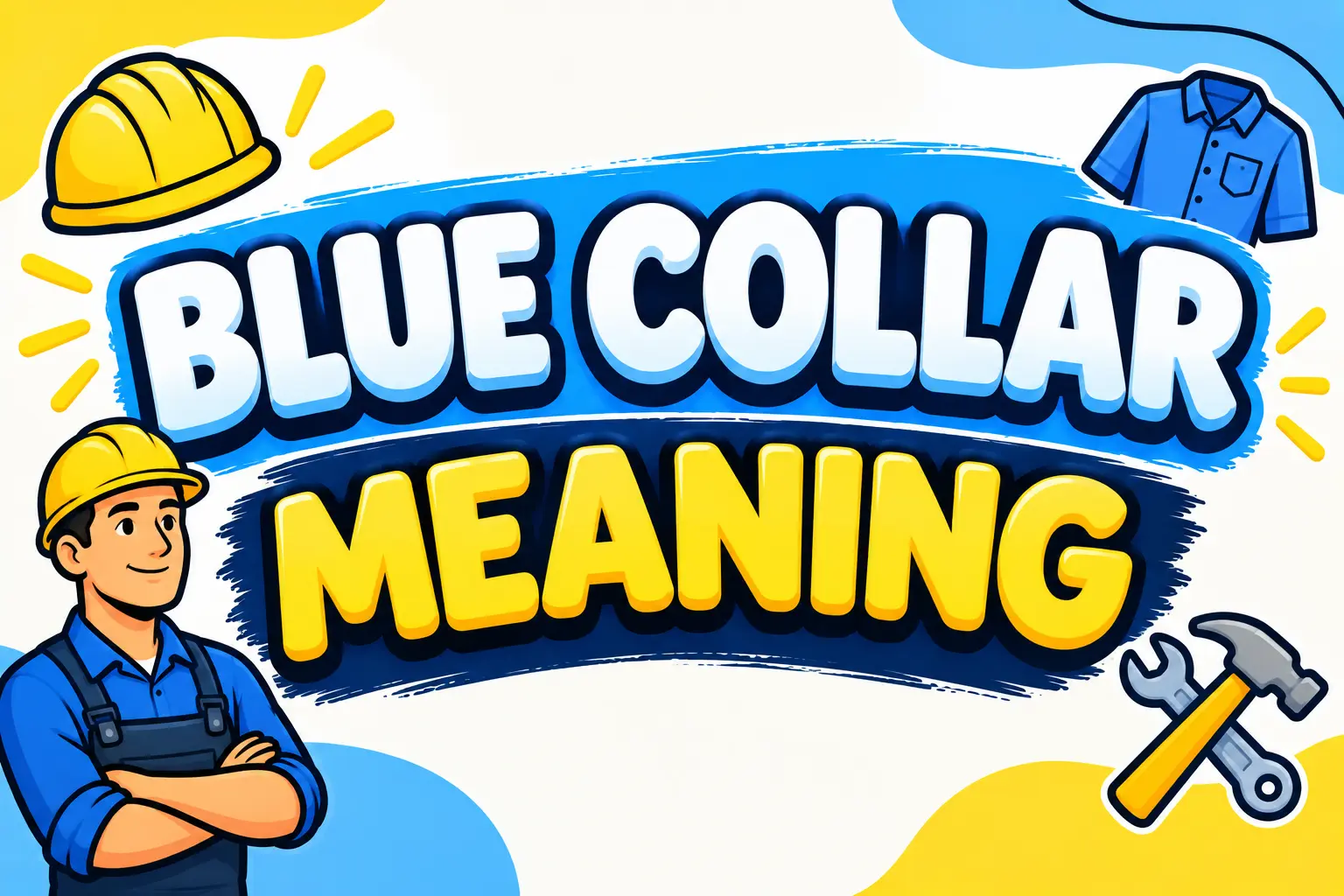
The blue collar meaning refers to workers who do manual, physical, or trade-based labor, usually paid hourly rather than salaried. Think electricians, welders, mechanics, and construction workers. This guide breaks down where the phrase came from, how it’s used today on social media and in job listings, and how it compares to terms like white collar and gray collar. By the end, you’ll know exactly how to use the phrase correctly in conversation, writing, or online.
Table of Contents
Blue Collar Meaning – Quick Definition
At its core, the term describes someone who works with their hands. The name comes from the durable blue work shirts that laborers historically wore on the job, since blue hid dirt and grease better than lighter colors.
| Term | Blue Collar Meaning |
| Type of work | Manual labor, skilled trades, physical tasks |
| Pay structure | Usually hourly wages, sometimes with overtime |
| Common settings | Factories, construction sites, warehouses, garages |
| Education path | Trade school, apprenticeship, on-the-job training |
| Example jobs | Electrician, plumber, machinist, truck driver |
According to <cite index=”1-1″>Dictionary.com’s definition, blue-collar refers to workers engaged in manual labor, especially industrial labor</cite>. That’s the foundation of how the phrase is used in almost every context today, from HR paperwork to casual conversation.
Where Does the Term Blue Collar Come From?
The phrase dates back to the early 20th century in American factories. Workers on the floor needed clothing tough enough to survive grease, dust, and long shifts, so chambray and denim shirts in shades of blue became standard uniforms. Office staff, on the other hand, wore white dress shirts, which is exactly why the phrase “white collar” was born as its natural opposite.
By the 1920s, newspapers and labor unions had already picked up the term to separate industrial labor from office work. It stuck because it was simple, visual, and instantly understood, which is part of why the blue collar meaning has barely changed in over a hundred years. Merriam-Webster traces the earliest documented use of the term to around 1924, right as American manufacturing was booming.
Blue Collar vs White Collar: What’s the Difference?
People often ask about blue collar meaning specifically because they’re trying to compare it against its opposite. Here’s a side-by-side look.
| Category | Blue Collar | White Collar |
| Work type | Physical, hands-on, trade-based | Administrative, professional, desk-based |
| Typical pay | Hourly wage | Fixed salary |
| Dress code | Uniforms, coveralls, safety gear | Business casual or formal attire |
| Work location | Job sites, factories, workshops | Offices, corporate buildings |
| Examples | Carpenter, welder, HVAC technician | Accountant, lawyer, marketing manager |
Neither category is “better” than the other; they’re just different systems of work with different risks, schedules, and skill requirements. In fact, many blue collar trades now out-earn entry-level white collar roles, especially in fields with labor shortages like plumbing and electrical work. If you want to see how trade-specific terms fit into this picture, our breakdown of HVAC meaning covers one of the most in-demand blue collar careers right now.
Blue Collar Meaning in Everyday Use and Social Media
The phrase isn’t just an HR term anymore. It shows up constantly in captions, tweets, and comment sections, usually to signal pride in hard, physical work or to call out class differences.
On X/Twitter: People use it to describe entire industries or to make political points about labor. On TikTok: Tradespeople post “day in the life” videos captioned with phrases like “blue collar life” to show off real work. On Instagram: Contractors and mechanics tag posts with the phrase to build a personal brand around their trade. On LinkedIn: Recruiters and HR teams use it formally when describing job categories in postings. On Facebook: Older users tend to use it in community groups discussing local job openings.
Reply and Caption Examples
| Platform | Example Message | What It Means |
| Twitter/X | “Respect the blue collar meaning behind every building you walk into.” | Honoring manual laborers |
| TikTok caption | “POV: another 12-hour blue collar shift” | Showing a long workday |
| Instagram bio | “Blue collar by day, dad by night” | Identity built around trade work |
| LinkedIn post | “Hiring blue collar meaning skilled tradespeople for our new plant” | Formal job description |
| Facebook comment | “My whole family is blue collar, proud of it” | Family pride in labor jobs |
| Reddit comment | “Blue collar work built this country” | Cultural statement |
| Text message | “Dad’s still blue collar at 60, works harder than most of us” | Praise for endurance |
| YouTube comment | “This channel is for real blue collar guys, not influencers” | Authenticity claim |
Common Blue Collar Jobs
The blue collar meaning covers a wide range of trades, not just factory work. Common examples include:
- Electricians
- Plumbers
- Welders
- Machinists
- Construction workers
- Truck drivers
- HVAC technicians
- Mechanics
- Warehouse workers
- Landscapers
Skilled vs Unskilled Blue Collar Jobs
Not every blue collar role requires the same training. Skilled trades like electricians and welders usually need years of apprenticeship and certification. Unskilled roles, like general warehouse labor, can often be learned within days. This distinction matters a lot in pay negotiations and career planning, since skilled blue collar workers frequently earn more than people assume.
Similar Terms to Blue Collar
Language around work categories has expanded well past the original two colors.
| Term | Meaning |
| White collar | Office and professional work |
| Gray collar | Jobs blending physical and technical skill, like lab techs |
| Pink collar | Service and care-based roles, historically female-dominated |
| Green collar | Jobs tied to environmental or renewable energy work |
| Gold collar | Highly skilled specialists, like surgeons or pilots |
Common Mistakes People Make With the Term
People often misuse the phrase in a few predictable ways:
- Assuming it means low-skill work. Many blue collar jobs require years of training and licensing.
- Using it as an insult. The phrase describes a category of work, not a person’s worth or intelligence.
- Confusing it with income level. Plenty of blue collar workers out-earn office employees.
- Applying it too narrowly. It covers more than factory floors; it includes drivers, technicians, and repair specialists too.
Quick Summary: Blue Collar Meaning in One Glance
The blue collar meaning boils down to this: physical, trade-based, or manual labor, historically tied to the blue work shirts laborers wore to hide dirt and stains. It’s the direct opposite of white collar office work, and it now shows up everywhere from HR job postings to TikTok captions celebrating hard work.
Blue Collar Meaning FAQs
What is the simple blue collar meaning? It refers to someone who does physical or manual labor, typically paid by the hour rather than a fixed salary.
Why is it called “blue” collar specifically? Because factory and trade workers historically wore durable blue shirts that hid dirt and grease better than lighter fabrics.
Is blue collar an insult? No. It’s a neutral description of a type of work, not a judgment on someone’s intelligence or value.
What’s the opposite of blue collar? White collar, which refers to office-based, administrative, or professional work.
Are blue collar jobs lower paying? Not necessarily. Many skilled trades like electricians and welders earn salaries that rival or exceed entry-level office jobs.
What is gray collar work? It’s a middle category between blue and white collar, describing jobs that mix physical tasks with technical or scientific knowledge.
Do you need a degree for blue collar jobs? Most don’t require a four-year degree, but many require trade school, apprenticeships, or certifications.
How is the term used on social media? People use it in captions and comments to express pride in physical work, describe their career identity, or make points about class and labor.
Is a truck driver blue collar? Yes, truck driving falls under the blue collar meaning because it’s a hands-on, physically demanding job outside a traditional office setting.
Can someone be both blue collar and highly paid? Absolutely. Skilled trades often pay very well due to high demand and specialized training requirements.