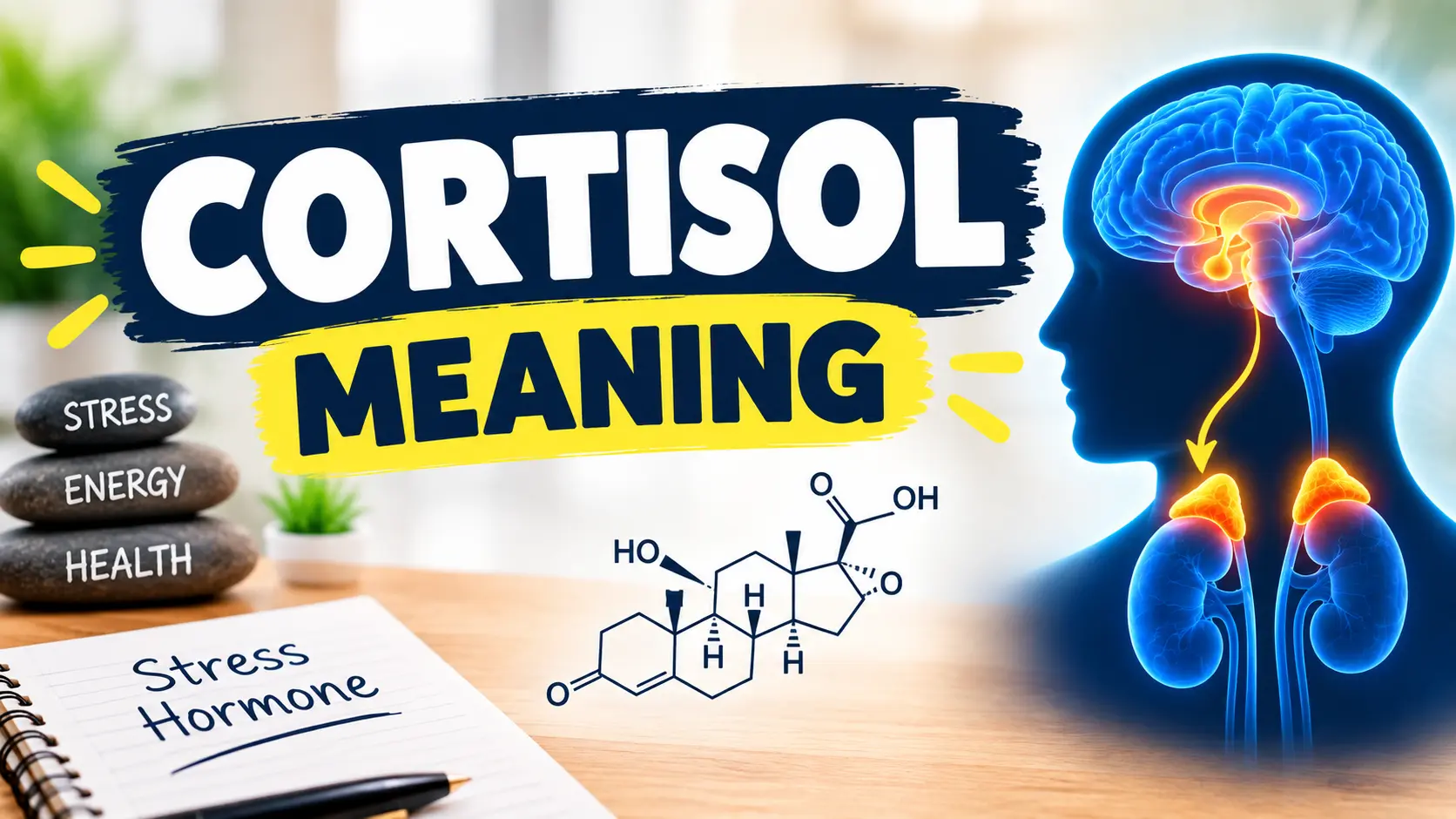
The cortisol meaning comes down to this: cortisol is a hormone your body releases in response to stress, and it plays a central role in regulating energy, blood sugar, inflammation, and your body’s overall stress response. It’s often called “the stress hormone,” but it’s involved in far more than just stressful moments — it helps control your sleep-wake cycle, metabolism, and immune response every single day. This guide covers what cortisol actually does, what causes it to rise or fall, common signs of imbalance, and simple, general habits that support healthier levels.
By the end, you’ll understand exactly why this hormone gets talked about so much, and what’s actually worth paying attention to.
Table of Contents
Cortisol Meaning: Quick Definition Table
| Term | Cortisol Meaning |
| Type | Steroid hormone |
| Produced by | The adrenal glands, located above the kidneys |
| Regulated by | The hypothalamic-pituitary-adrenal (HPA) axis |
| Main roles | Stress response, blood sugar regulation, metabolism, inflammation control |
| Common nickname | “The stress hormone” |
| Natural pattern | Highest in the morning, gradually lower throughout the day |
Understanding the cortisol meaning starts with knowing it isn’t inherently bad — it’s a normal, necessary hormone. Problems tend to arise when levels stay elevated for too long, or when the body’s natural rhythm gets disrupted.
How Cortisol Actually Works
Cortisol is produced through a communication system called the HPA axis: the hypothalamus signals the pituitary gland, which signals the adrenal glands to release cortisol. This entire system responds to physical, emotional, and even perceived threats, which is why cortisol can spike from something as serious as real danger or as ordinary as a stressful email.
Once released, cortisol does several important jobs:
- Raises blood sugar by prompting the liver to release glucose for quick energy
- Suppresses non-essential functions temporarily, like digestion and immune activity, during acute stress
- Regulates the sleep-wake cycle, naturally peaking shortly after waking and declining through the day
- Controls inflammation, which is why synthetic cortisol-like medications are used to treat inflammatory conditions
- Helps the body respond to physical stress, including illness, injury, and intense exercise
This is the core of the cortisol meaning in a functional sense — it’s less about “stress” specifically and more about helping your body respond and adapt to changing demands.
What Raises Cortisol Levels
Cortisol naturally rises and falls throughout the day, but several factors can push levels higher than they’d normally be.
- Ongoing psychological stress, including work pressure, relationship conflict, or financial strain
- Poor or inconsistent sleep, which disrupts the hormone’s natural rhythm
- Intense or excessive exercise, particularly without adequate recovery
- Caffeine, especially in large amounts or on an empty stomach
- Chronic illness or inflammation, which keeps the stress response system activated
- Irregular eating patterns, including skipping meals or extended fasting
Signs Cortisol May Be Out of Balance
While only a medical test can confirm actual cortisol levels, some general patterns are commonly associated with elevated or disrupted cortisol over time:
- Persistent fatigue, especially despite adequate sleep
- Difficulty falling asleep despite feeling exhausted
- Increased cravings, particularly for sugar or high-calorie foods
- Feeling wired or anxious without an obvious cause
- Trouble concentrating or feeling mentally foggy
- Changes in weight, particularly around the midsection
These patterns aren’t a diagnosis on their own, since many of them overlap with other causes, but they’re commonly discussed in relation to cortisol because of how closely the hormone connects to stress, sleep, and metabolism.
Cortisol vs Similar Hormones
| Hormone | How It Differs From Cortisol |
| Adrenaline (epinephrine) | Acts within seconds during acute stress; cortisol acts more slowly and lasts longer |
| Melatonin | Regulates sleep onset; cortisol regulates wakefulness and the morning alertness spike |
| Insulin | Lowers blood sugar; cortisol raises it during stress |
| Testosterone | A sex hormone tied to reproduction and muscle growth, unrelated to the stress response |
| DHEA | Often discussed alongside cortisol as a counterbalancing adrenal hormone |
Adrenaline is the hormone most often confused with cortisol, largely because both are released during stress. The key difference is speed and duration: adrenaline causes the immediate “fight or flight” reaction, while cortisol sustains the body’s response over a longer stretch of time.
General Habits That Support Healthy Cortisol Levels
These are broad, general wellness habits commonly associated with supporting a healthy stress response — not a treatment plan, and not a substitute for medical guidance if you have specific concerns.
- Prioritize consistent sleep, since irregular sleep schedules disrupt cortisol’s natural rhythm
- Build in regular movement, without over-relying on extremely intense exercise
- Practice stress-reduction techniques, such as deep breathing, journaling, or time outdoors
- Limit excessive caffeine, especially later in the day or on an empty stomach
- Eat consistent, balanced meals rather than skipping meals or going long stretches without eating
- Maintain social connection, since strong relationships are linked to better stress regulation
When to Talk to a Doctor
Cortisol imbalances significant enough to require medical attention, such as Cushing’s syndrome (too much cortisol) or Addison’s disease (too little cortisol), are diagnosed through blood, saliva, or urine testing, not through symptoms alone. If you’re experiencing persistent fatigue, unexplained weight changes, or other symptoms that concern you, a healthcare provider can order the appropriate testing rather than relying on guesswork.
Real Examples of Cortisol in Everyday Conversation
- “My doctor ordered a cortisol test after I mentioned constant fatigue.”
- “High cortisol from chronic stress has been linked to poor sleep quality.”
- “She started a morning walk routine specifically to help manage her cortisol levels.”
- “Cortisol naturally spikes in the morning to help you wake up and feel alert.”
- “He cut back on afternoon coffee after learning it was affecting his cortisol rhythm.”
- “The article explained how chronic stress keeps cortisol elevated for too long.”
- “Her endocrinologist explained the connection between cortisol and blood sugar regulation.”
- “Sleep specialists often point to cortisol disruption as a factor in poor sleep patterns.”
- “The wellness coach recommended breathing exercises to help regulate cortisol during stressful weeks.”
- “Cortisol testing helped rule out an adrenal issue after months of unexplained symptoms.”
Cortisol Meaning: Quick Summary
- Cortisol is a hormone released by the adrenal glands that helps regulate stress, blood sugar, metabolism, and inflammation.
- It naturally peaks in the morning and gradually declines throughout the day.
- Chronic stress, poor sleep, and irregular eating patterns can all affect cortisol levels.
- Common symptoms associated with imbalance include fatigue, sleep issues, and difficulty concentrating.
- Confirming an actual cortisol imbalance requires medical testing, not symptoms alone.
FAQs About Cortisol Meaning
What is the simplest cortisol meaning? The simplest cortisol meaning is that it’s a hormone your body releases to help manage stress, energy, and blood sugar levels.
Why is cortisol called the stress hormone? It’s called the stress hormone because it’s a primary hormone released during the body’s stress response, though it also plays a role in daily functions unrelated to stress.
What happens if cortisol stays high for too long? Chronically elevated cortisol has been associated with fatigue, sleep disruption, weight changes, and increased inflammation, though a proper diagnosis requires medical testing.
Can low cortisol also cause problems? Yes. Low cortisol, as seen in conditions like Addison’s disease, can cause fatigue, low blood pressure, and other symptoms, and also requires medical diagnosis.
Does caffeine affect cortisol levels? Yes, caffeine can temporarily raise cortisol levels, especially when consumed in large amounts or on an empty stomach.
What time of day is cortisol naturally highest? Cortisol typically peaks shortly after waking in the morning and gradually declines throughout the day.
Can exercise raise cortisol? Yes, especially intense or prolonged exercise, though moderate regular exercise is generally considered supportive of healthy stress regulation overall.
How is cortisol actually tested? Cortisol can be measured through blood, saliva, or urine tests, often at specific times of day to account for its natural daily rhythm.
Is cortisol always harmful? No. Cortisol is essential for normal body function, and problems generally arise from chronically elevated or disrupted levels, not the hormone itself.
Can lifestyle changes actually lower cortisol? General habits like consistent sleep, stress management, and balanced eating are commonly associated with supporting healthy cortisol regulation, though significant imbalances should be addressed with a healthcare provider.