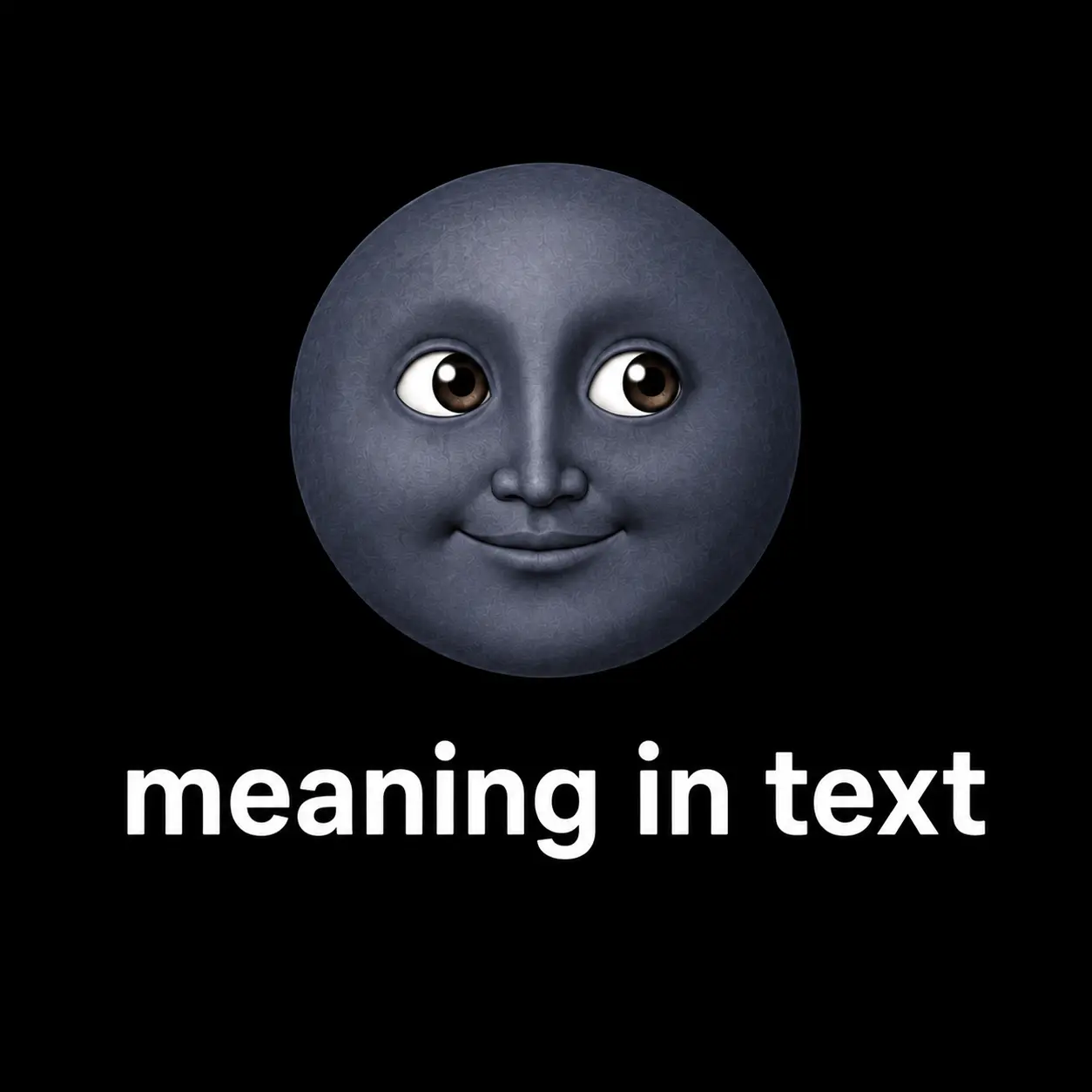
The 🌚 meaning in text centers on mischief — it’s used to hint that something sneaky, sarcastic, or slightly suggestive is going on, without saying it outright. Officially called the “New Moon Face,” this emoji shows a shadowy, smirking moon that people drop into a message when they want to imply something without stating it directly. This guide covers the real meaning, the different tones it can carry, and how to read it depending on who sent it.
Unlike a straightforward emoji like 😂 or ❤️, the 🌚 relies almost entirely on context. The same emoji can read as playful teasing, dry sarcasm, or a flirty hint, depending on what came right before it in the conversation.
Table of Contents
🌚 Meaning in Text: The Simple Definition
At its core, the 🌚 meaning in text points to secrecy, sarcasm, or subtle mischief. It commonly signals:
- Something sneaky or being kept intentionally vague
- Dry, deadpan sarcasm after a bold or ridiculous statement
- A flirty or suggestive undertone, often left unspoken
- Mild awkwardness, used to soften an embarrassing admission
Its dark, shadowed appearance combined with a subtle, sideways smirk gives it a very different feel from its counterpart, the 🌝 Full Moon Face, which reads as bright, warm, and far less loaded.
Where the 🌚 Meaning in Text Comes From
The New Moon Face emoji was added to the Unicode standard back in 2010 and became widely available on messaging platforms as part of the original emoji set. Unlike slang terms tied to a viral clip or meme, its meaning developed gradually through repeated use, as people leaned on its slightly unsettling expression to add tone to messages that words alone couldn’t quite capture.
Because the emoji’s face reads as a bit sly — eyes glancing to the side, a faint smirk — people naturally gravitated toward using it whenever a message needed a wink-and-nudge feeling. Over time, it picked up nicknames like “Creepy Moon” and “Dark Moon Face,” reflecting how consistently it gets used for shady, sarcastic, or suggestive moments rather than as a neutral reference to nighttime.
How People Actually Use 🌚 in Conversations
In practice, 🌚 rarely stands alone with a literal meaning about the moon. It almost always adds tone to whatever message it’s attached to.
Common situations include:
- Hinting at a secret without revealing it (“I have news but I’m not telling you yet 🌚”)
- Adding sarcasm after an obviously exaggerated statement
- Softening a slightly bold or flirty comment
- Reacting to something awkward or embarrassing with a knowing smirk
The emoji works because it lets the sender imply a tone rather than state it, which is exactly why context matters so much when reading it.
Is the 🌚 Meaning in Text Different on Snapchat?
The 🌚 meaning in text doesn’t officially change on Snapchat, but it shows up frequently in captions hinting at something the sender isn’t fully explaining, often paired with a vague or teasing message about someone’s night. On Snapchat, it’s common in stories where someone wants to imply a fun or slightly mysterious update without spelling out the details.
🌚 Meaning in Text: Quick Summary Table
| Element | Detail |
| Official name | New Moon Face |
| Tone | Sneaky, sarcastic, sometimes flirty or suggestive |
| Common nicknames | Creepy Moon, Dark Moon Face |
| Added to Unicode | 2010, part of the original emoji set |
| Counterpart | 🌝 Full Moon Face, a brighter, more neutral expression |
| Typical use | Hinting at secrecy, sarcasm, or a suggestive undertone |
Platform-by-Platform: 🌚 Meaning in Text Across Different Apps
The core meaning holds steady everywhere, but how it’s used shifts slightly by platform.
| Platform | How 🌚 Is Typically Used |
| Snapchat | Captions hinting at something fun or mysterious without full details |
| TikTok | Comments adding a sarcastic or knowing tone to a video |
| Captions or comments implying something without stating it directly | |
| Casual chats hinting at plans or secrets between friends | |
| Discord | Reacting to a sneaky or suspicious in-game move or comment |
| Facebook Messenger | Less common, occasionally used for dry sarcasm |
| X (Twitter) | Replies adding sarcasm or implying something left unsaid |
Across every platform, the 🌚 meaning in text stays tied to implication — the emoji rarely means exactly what it shows.
Real Chat Examples of 🌚 in Action
Context makes the tone click faster than a definition alone.
| Message | Reply Using 🌚 |
| “What are you actually doing this weekend?” | “just stuff 🌚” |
| “Why do you look so happy today” | “no reason 🌚” |
| “You’ve been quiet, what’s going on?” | “nothing… yet 🌚” |
| “Did you tell him what happened?” | “not all of it 🌚” |
| “You’re staying in tonight, right?” | “that’s what I said 🌚” |
| “Why are you smiling at your phone” | “no reason 🌚” |
| “You disappeared for two hours yesterday” | “did I though 🌚” |
| “I saw you talking to them at the party” | “we were just talking 🌚” |
| “What’s the surprise?” | “you’ll see 🌚” |
| “Be honest, did you do it on purpose?” | “maybe 🌚” |
Common Replies When Someone Sends You 🌚
If someone drops a 🌚 in response to your message, there’s no need to overanalyze it right away. Common replies include:
- “Okay what does that mean 😭”
- “Tell me right now”
- A matching 🌚 back
- “That’s suspicious”
- “I need details”
Common Mistakes People Make With 🌚
A few missteps show up often enough to flag directly:
- Sending it without any context. A lone 🌚 with nothing else can leave the other person completely unsure what you’re implying.
- Assuming it’s always flirty. It frequently signals sarcasm or general secrecy rather than romantic or suggestive intent.
- Using it in professional messages. Its sly, implication-heavy tone doesn’t fit workplace or formal communication at all.
- Overusing it until it loses impact. Attaching it to every message dilutes the “knowing” effect it’s meant to carry.
Similar Slang Terms to 🌚
A few related emojis and phrases carry a similar implied or sneaky tone:
- 👀 – Signals watching a situation closely, often paired with 🌚 for extra suspicion
- 🌝 – The brighter counterpart, used for warmth rather than mischief
- 😏 – A smirking face emoji that overlaps heavily with the sarcastic or flirty tone of 🌚
- Lowkey – A text-based way of hinting at something without fully admitting it
If you want to compare it with related implication-heavy slang, it’s worth checking lowk meaning in text, since both hint at something without saying it outright, and the upside down face emoji meaning in text for another emoji that leans heavily on tone over literal meaning.
Emoji Pairings That Match 🌚
Certain emojis show up frequently alongside 🌚 to reinforce its implied tone:
- 👀 — Adds suspicion or watchfulness to the message
- 😏 — Reinforces a sly, knowing smirk
- 🤭 — Suggests holding back a laugh or a secret
- 💀 — Adds dramatic or exaggerated reaction alongside the implication
None of these are required, but pairing 🌚 with another emoji often clarifies which tone — sneaky, sarcastic, or flirty — is intended.
Quick Summary
The 🌚 meaning in text centers on implication rather than a literal reference to the moon — it signals secrecy, sarcasm, or a flirty undertone depending on the conversation around it. Officially called the New Moon Face, its shadowy, smirking expression has made it a go-to for messages meant to hint at something rather than state it directly. Reading the surrounding context is the fastest way to know which tone applies.
Frequently Asked Questions
What is the 🌚 meaning in text? 🌚 signals secrecy, sarcasm, or a flirty undertone. It’s used to imply something without stating it outright, rather than referencing the moon literally.
Is 🌚 always flirty? No. It’s frequently used for sarcasm or general secrecy, and only sometimes carries a flirty or suggestive tone depending on the conversation.
What’s the difference between 🌚 and 🌝? 🌚 (New Moon Face) carries a sly, implication-heavy tone, while 🌝 (Full Moon Face) reads as brighter, warmer, and more neutral.
Why is 🌚 sometimes called the “Creepy Moon”? Its shadowy color and subtle smirk give it an unsettling, knowing expression, which is where informal nicknames like “Creepy Moon” come from.
Is it appropriate to use 🌚 in professional messages? No. Its sly, implication-heavy tone doesn’t fit workplace or formal communication.
How should I reply if someone sends me 🌚 with no context? Asking directly, like “okay what does that mean,” is a completely normal way to respond when the implication isn’t clear.
Does the 🌚 meaning in text change across platforms? The meaning stays consistent everywhere, though it shows up especially often in Snapchat captions hinting at something without full details.
Can 🌚 be used sarcastically? Yes, it’s commonly used to add a dry, sarcastic tone after an exaggerated or obviously ironic statement.
When did the 🌚 emoji first become available? It was added to the Unicode standard in 2010 and became part of the original emoji set used across messaging platforms.
What emojis pair well with 🌚? 👀, 😏, and 🤭 are common pairings, each reinforcing a slightly different flavor of suspicion, sarcasm, or held-back secrecy.